Online Master of City Planning

The University of Cincinnati’s Master of City Planning, launching in Spring 2026, is a 30-credit-hour, fully online graduate program designed for experienced professionals aiming to advance in urban planning. Shape the future of urban spaces with a flexible format, a curriculum aligned with industry needs, and expert faculty. This program equips students with the skills and knowledge to lead in the dynamic field of urban development.
Master of City Planning Program Highlights
High Quality Education
City planning is a dynamic and rapidly changing field, with an increasing need for forward-thinking, strategic leaders. The Master of City Planning (MCP) is designed for professionals seeking to advance their careers and Industry-Driven Curriculum is taught by experts in planning, architecture, and economic and community development.
Whether you’re in local government, private consulting, or a non-profit organization, this program provides the skills and knowledge to address complex urban challenges related to real estate, transportation, or sustainability. Graduates are prepared to shape communities by influencing land use, economic development, infrastructure, environmental policy, and social initiatives. If you’re a mid-career professional looking to make a more significant impact in urban planning, the MCP program is built for you.
Flexibility
- 100% Online & Flexible: Study at your own pace with both part-time and full-time options.
- Accelerated Completion: Complete your degree in as little as five semesters, with up to five years to complete the program.
- Affordable & Competitive: Benefit from a lower cost per credit hour.
Support from Application through Graduation
At UC, you’ll have a full support team behind you:
Enrollment Services Advisor: Your partner through the application process, getting enrolled, and starting your program
Student Success Coordinator: Helping you prepare for classes and stay on track
Access to Resources: Access to university resources that will support you through your program including online learning expectations and resources, health and wellness resources, and academic support
The online Master of City Planning is 10 total course (30 credit hours), and a full-time student can complete the program in 5 semesters.
| Course | Title/Description | Credit |
|---|---|---|
| PLAN 7001 | Planning in Urban Communities This course provides an overview of historic and contemporary planning theory, practice, policy and processes. Topics covered include: purpose and meaning of planning and its ethical, visionary, and normative imperatives; history of urban planning practice and the development of urban planning profession in the United States and abroad; planning-related constitutional rights and principles, state and local government law, and administrative rules and regulations; and the institutions that both shape and respond to plans and planning related activities. As part of its overview, this course will closely examine the need for and benefits from the use of planning theories to guide and understand planning processes. A range of theoretical approaches will be studied, from the widely used but largely discredited rational theories, to more contemporary theories of communicative action, pragmatic planning and critical planning. |
3 |
| GEOG 6071C | Introduction to Geographic Information Sciences Introduction of the theories and applications of Geographic Information Sciences (GIS). The basic topics include definition of GIS, the history of GIS, topological data structure, data preprocessing, data manipulation and analysis, geographic modeling with GIS, and the future of GIS. The focus of this course is spatial analysis. |
3 |
| Course | Title/Description | Credit |
|---|---|---|
| PLAN 6058 | Transportation Planning This course will introduce urban transportation planning and provide an overview of transportation system evaluation. Topics covered include current federal legislation, multi-modal transportation, history of public transportation funding, the legislative process, transportation improvement programs, and long-range and short-range transit planning and programming. |
3 |
| PLAN 6072 | Graphics and Communication for Planners This course provides the visual and verbal tools to communicate analyses, plans and designs for urban environments. Students will work with graphic software packages providing them with the skills to communicate ideas in two and three dimensions, including basic concepts of graphic design, color theory, layout and proportions, and typography for successful visual communication. Students will also explore multimedia applications that equip them to use words, numbers, and pictures for effective storytelling. This includes creating interactive presentations, portfolios, and websites for visions, scenarios, and implementation strategies. The aims of this interactive class are to equip the students with: Visual skills to learn the ‘eye’ of communicating urban planning and design information in a clear, legible and interactive manner; Communication skills to use words, numbers, and pictures for sharing information in a public setting; Technical skills to use graphic software packages and create professional grade 2D and 3D graphics; Intellectual skills to think critically and communicate ideas to shape the urban environment; and Professional skills to perform in a professional setting and produce quality work. |
3 |
| PLAN 7002 | Structure and Dynamics of Human Settlements In-depth examination of the factors shaping the physical organization and structure of urban areas and non-urban regions, and the theories available to interpret urban and regional growth. The course analyzes cities as multi-dimensional systems in which social, political, economic, environmental and physical factors interact to shape neighborhoods and communities, produce successful outcomes or result in the emergence of urban problems. Students will learn to employ urban and regional theoretical frameworks to analyze past and present conditions of cities, communities and neighborhoods, understand the factors that contributed to the emergence of these conditions, and identify approaches by which the social, economic and other forces could be used to reverse undesirable urban phenomena and promote positive change. |
3 |
| PLAN 7005 | Methods of Planning Systems Analysis Quantitative and qualitative methods and techniques play an important role in the daily life of planning professionals. For conducting productive research, supporting decision-makers, and/or making recommendations and strengthening arguments for a preferred course of action, the selection and correct application of the appropriate quantitative technique and the in-depth interpretation of findings and results is crucial to the successful outcome of the planning process. The purpose of this course is to introduce students to the most essential planning-analytical methods, including demographic and economic analytical methods and financial and transportation analysis. Students will learn the nuts and bolts of these selected methods and techniques, their theoretical foundations, their applicability to real world issues, and their strengths and limitations. Throughout the course, students will learn to apply these selected methods to examples, interpret their results, and make recommendations to policy makers. |
3 |
| ECON 7000 | Foundations in Economics This course provides an introduction to the fundamentals of economics at the graduate level for students without previous economics coursework. Students will be exposed to the essentials of both microeconomics and macroeconomics. Microeconomics topics to be discussed include the supply and demand mechanism,how markets are affected by regulation and taxation, costs of production, and how market structure affects outcomes. Macroeconomic topics to be discussed include the fundamental measures of the aggregate economy, the sources of economic growth, explaining short-run fluctuations in economic activity, and how government policies can affect these fluctuations. A particular focus will be to understand how fundamental economic principles at both the micro and macro level can affect companies, investments, industries, and national economies. This course may not be used as an elective course for Lindner College of Business Master's programs. |
2 |
| Course | Title/Description | Credit |
|---|---|---|
| PLAN 7009 | Master's Project for Community Planning The capstone is one of the options for students completing the MCP degree, the other being a thesis. Students enrolled in this Capstone are required to use most of the knowledge acquired in the previous semesters in core courses and specific specialization track’s courses. The Capstone’s instructor will suggest a topic within the realm of the selected specializations and undertake a project related to them. The instructor will be responsible for the organization of the Capstone format: individual, team, or hybrid, and of the expectations for the final products structures. |
3-6 |
| Course | Title/Description | Credit |
|---|---|---|
| LAW 6001 | Introduction to Law The course introduces students to the essential vocabulary and concepts needed to work within the U.S. legal system. The course provides an introduction to substantive areas of the law which serve as the foundation for upper-level courses. The Constitutional Law portion of this course introduces students to the Constitution’s enumeration and limitation of the powers of the national government, the principles of federalism and the sovereignty of states in the federal system, the distribution of powers across the legislative, executive, and judicial branches of the national government, and the practice of judicial review. |
3 |
| LAW 6009 | Administrative Law Government agencies increasingly regulate the marketplace, establish and enforce rules pertinent to the health and safety of people, and provide basic services. This Administrative Law course explores the constitutional powers and limitations on agency actions, judicial review of agencies, and the procedures with which agencies must comply in regulating or providing benefits. Students will consider ethical issues relevant to the substantive legal issues addressed in the course. |
3 |
| BA 7010 | Corporate Legal and Social Responsibility Develops a manager's ability to exercise informed judgment with regard to the ethical and legal issues that arise in domestic and global business in the context of the employment relationship, financial decisions, environmental protections, and product development. |
2 |
| HCA 7001 | Health Systems Management 1: Organization & Delivery The course is intended to provide the student with a systems perspective of U.S. health and health care structure and function. As the MHA Program’s introductory course, it provides a basis for all subsequent courses including leadership, systems analysis, finance and economics, quality improvement, policy and law, and others. Topics include an overview of the social, political, economic and structural dynamics which shape health care in the United States as well as current and likely future imperatives health care managers will face. Evaluation is competency-based; students will be expected to demonstrate proficiency at seeking and applying evidence to managerial decision-making, the effective communication of ideas, and a number of different types of analyses relevant to cases and issues affecting U.S. healthcare today. |
3 |
| IS 7065 | Generative Artificial Intelligence for Business This course examines the technology underlying modern generative artificial intelligence / machine learning models from a business perspective, including their uses in coding, professional and artistic applications, and the various controversies and challenges to work and/or society they may pose. |
2 |
| CJ 7050 | Introduction to Crime Mapping This course is designed to teach the elementary skills and techniques of Geographic Information Science (GIS), with a focus on crime analysis, using ESRI ArcGIS 10.1, or similar software package. ArcGIS is a software platform that is used to apply geography to solving problems and making decisions. In addition to GIS techniques, we will be covering basic data preparation procedures, as well as a brief survey of various types of crime data and how to acquire such data. |
3 |
GEOG 6021
|
Crime Mapping and Analysis Introduction of crime databases, crime mapping andspatial analysis of crime in a GIS environment. |
3 |
An Enrollment Services Advisor will guide you through the application and admission process. Each student is assigned a dedicated advisor who can answer questions, offer guidance, and assist with your specific educational needs.
Prerequisites
- UC Graduate Admissions Application.
- 2-3 years of working experience in a related field.
- A bachelor’s degree from a regionally or nationally accredited college/university in a related field such as landscape architecture, architecture, planning, public policy, sociology, political science, or civil engineering.
- 3.0 cumulative GPA for undergraduate coursework.
- Transcripts (to be uploaded with the online application). Upon acceptance, official transcripts showing the conferral of the undergraduate degree must be submitted to complete the enrollment process. (For international students: Official transcript evaluations from a NACES member organization are required).
- GRE is not required.
- Portfolio is optional.
Complete the online application and submit the application fee.
Standard Application Fees:
- $65.00 for domestic applicants to most degree programs
- $70.00 for international applicants to most degree programs
- $20.00 for domestic applicants to Graduate Certificates
- $25.00 for international applicants to Graduate Certificates
- Application fees are waived for Summer 2026 applications submitted by March 1st, 2026
- Application fees are waived for Fall 2026 applications submitted by July 1st, 2026
- Fee waivers are automatically applied for applicants who:
- are currently serving in the US armed forces
- are veterans of the US armed forces
All applicants are required to upload unofficial transcripts during the application process, showing all undergraduate and graduate course work completed, including degrees granted and dates of conferral.
Official transcripts are not required until the student has received and accepted an offer of admission from the university. Once the offer has been confirmed, the student must submit official transcripts.
Students who have received degrees from the University of Cincinnati do not need to submit official paper copies of their UC transcripts.
Transcripts can be submitted electronically or by mail. To see if your transcript(s) can be ordered electronically, visit the links below and search for your previous school(s).
- Parchment
- Please select “University of Cincinnati – Main Campus” as the recipient of your transcript.
- National Student Clearinghouse
- Please have your transcript sent directly to admissions@uc.edu.
If you do not see your past school(s) listed on either site, please contact the school(s) directly. Then, mail your sealed, unopened, official transcripts to:
Please mail sealed, unopened, official transcripts to:
University of Cincinnati
Office of Admissions
PO Box 210091
Cincinnati, Ohio 45221-0091
- Two letters of recommendation (three preferred).
Professional Resume:
A resume relevant to academic and professional data. It should include the applicant’s name; phone; email; colleges attended with degrees, dates conferred, and grade point average; employment history; professional experience; present employer; and names of references.
Curriculum Vitae:
A detailed look at the applicant’s career path, including achievements, publications, and awards. Including comprehensive information about candidate’s research background, presentations, publications, committee memberships and other experience of an academic, clinical, or scientific nature.
A two-page essay outlining your long-term goals in the field of city planning and explaining why pursuing an MCP degree is the right choice for you.
Test of English as a Foreign Language (TOEFL) of at least 87, International English Language Testing System (IELTS) of at least 6.5, English for Speakers of Other Languages (ESL) of at least 112, or a Duolingo English Test of at least 110 is accepted.
Transcripts must also be submitted for evaluation to an agency recognized by the National Association of Credential Evaluating Services (NACES; www.naces.org). Reference the Official Transcript Submission Policy for Enrollment for more information.
| Term | Application Deadline | Classes Start |
|---|---|---|
Summer 2026 Fall 2026 |
April 1, 2026 July 1, 2026 |
May 11, 2026 August 24, 2026 |
The University of Cincinnati's online course fees differ depending on the program. On average, students will accrue fewer fees than students attending on-campus classes.
The one fee applied across all UC Online programs is the distance learning fee. Students living outside the state of Ohio must also pay an additional “non-resident” fee to enroll in courses at UC Online. This fee is lower than the out-of-state fee for traditional on-campus programs.
To view tuition information and program costs, visit the Online Program Fees page.

Danilo Palazzo
Professor, Director of the School of Planning, DAAP School of Planning
6210 DAA Addition
2012 - today Full Professor and Director, School of Planning, College of Design, Architecture, Art and Planning, University of Cincinnati.
2002-2012 Associate Professor of urban planning and design at the School of Building Engineering-Architecture, Politecnico di Milano.
1997-2002 Assistant Professor of urban planning and design at the School of Architecture, Politecnico di Milano
Licensed Architect in Italy from 1990

David J. Edelman
Professor (F2), DAAP School of Planning
6102 Alms Building

Carla Chifos
Associate Professor, DAAP School of Planning
6280A DAA Addition
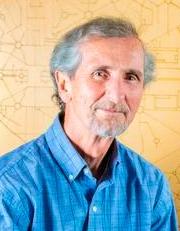
Christopher Auffrey
Professor, DAAP School of Planning
6106 DAA Addition
School of Planning, College of Design, Architecture, Art, and Planning
University of Cincinnati
6106 DAAP
Cincinnati, OH 45221-0016
Phone: (513) 556-0579, Fax: (513) 556-1274, E-mail: chris.auffrey@uc.edu

Rainer vom Hofe
Professor, Ph.D. Program Director, DAAP School of Planning
6209 DAA Addition
Rainer’s research interests lie in the area of urban and regional economics, economic development planning, environmental quality of life, and quantitative methods for urban and regional planning and policy analysis, including economic and fiscal impact analysis and spatial econometrics. He has published in several planning and regional science journals, including, among others: Urban Studies, Journal of Regional Science, Journal of Regional Analysis and Policy, Environment and Planning B, Annals of Regional Science.

Shilpa Mehta
Assistant Professor - Educator - Planning and Urban Studies, DAAP School of Planning
DAA Addition

Ready to get started?
We offer over 130 degrees from undergraduate to doctoral programs. Each program is supported by a team of Enrollment Services Advisors (ESAs) who are here to help answer any questions you have.